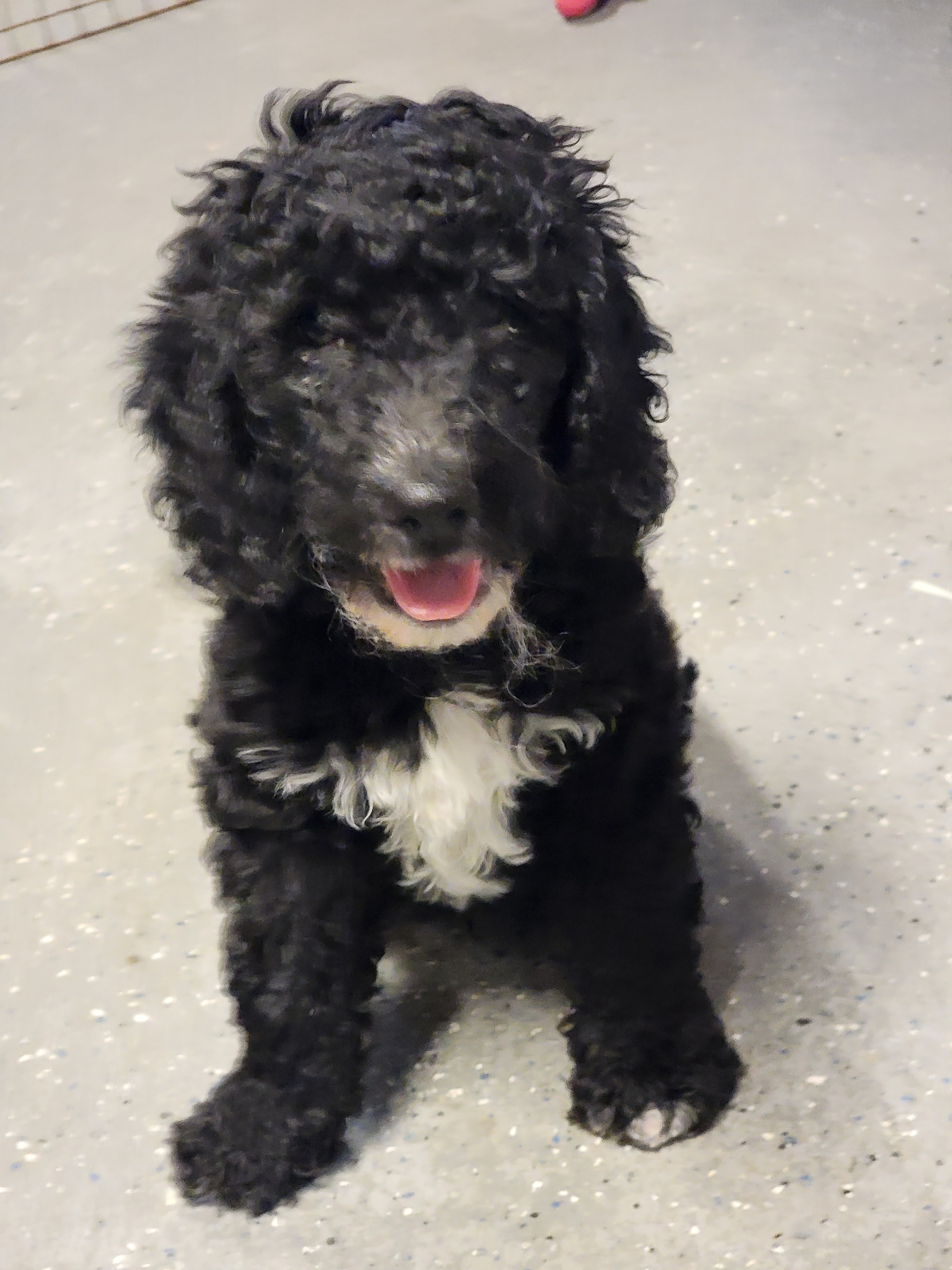
How to Crate Train a Goldendoodle Puppy
By Pat & Sonny Heino, Bittersweet Goldendoodles, Newport NH

A crate, used well, is a safe den for your puppy and a big help for you. Crate training makes housetraining faster, keeps your puppy safe while you are busy and gives your dog a peaceful place to rest. Here is the approach we recommend.
Choosing the right crate
Pick a crate big enough for your puppy to stand, turn around and lie down comfortably. If you buy one for your puppy’s adult size, use a divider so the space stays small at first.
Wire crates with a removable tray are easy to clean and let your puppy see out. Add a soft bed and a blanket that smells like home.
Make it a happy place
Never use the crate as punishment. Toss treats inside, feed meals in the crate and give a special chew only there. You want your puppy to walk in on its own.
Leave the door open at first and let your puppy explore. Praise every time your puppy goes in.
Start with short stays
Close the door for a minute while you sit nearby, then let your puppy out calmly. Slowly lengthen the time and begin leaving the room for short periods.
Keep arrivals and departures low-key. Big goodbyes can make a puppy anxious.
Nights in the crate
Put the crate near your bed at first, so your puppy can hear you. Take your puppy out right before bed and again if it wakes up and whines.
Most puppies settle within a few nights. If your puppy cries, make sure it does not need to go out, then wait calmly. Giving in to every whine teaches your puppy that crying works.
How long can a puppy stay in a crate?
A rule of thumb is one hour for each month of age during the day, up to about four hours, but young puppies need frequent potty breaks. Never leave a puppy crated longer than it can hold it.
Adult dogs should not spend all day in a crate. Give plenty of exercise, play and attention outside of crate time.
Crate and potty training together
The crate is a helpful housetraining tool, since dogs avoid soiling where they sleep. Take your puppy out right after crate time, and praise potty success.
Our article on potty training goes into more detail about schedules, cues and what to do after accidents.
Solving common problems
If your puppy barks, cries or tries to escape, go back a step and make stays shorter. Add exercise before crating and give a safe chew. Check that the crate is not too large or too hot.
If problems continue, call your vet to rule out a health cause. Some puppies need extra time and patience.
Retiring the crate
Many dogs keep using their crate as a bedroom for life. Others graduate to a dog bed once they are reliable and past the chewing stage. Leave the door open so your dog can choose.
If you have questions at any point, call us at 603-543-7012. We are happy to help.
Crate training and travel
A dog that is comfortable in a crate is much easier to take on trips. A crate is the safest way to travel by car, and it gives your dog a familiar spot in a hotel or a relative’s house. Practice with short trips so the crate and the car both feel normal.
Cover the crate with a light blanket during travel if your dog finds it calming, and bring a favorite toy. Always make sure your dog has water and a chance to go out for a break.
Mistakes to avoid
Do not use the crate for long stretches when your puppy is young, and do not use it for punishment. Do not let a puppy out while it is barking or whining, or it learns that noise opens the door. Wait for a brief quiet moment before opening.
Avoid leaving collars with tags on inside the crate, since they can catch. Check that your puppy is comfortable, not too hot and has nothing it can chew apart.
Enrichment inside the crate
A stuffed chew toy, a frozen treat or a puzzle feeder gives your puppy something fun to do. It teaches your dog that crate time is good time, and it fills the quiet minutes while you work.
Rotate the items so your dog stays interested, and always supervise new chews at first to make sure they are safe.
A sample crate-training week
On day one, feed meals in the crate with the door open and toss treats inside. By day three, close the door for a minute or two while you stay nearby. By day five, practice leaving the room for short periods. By the end of the week, your puppy should nap in the crate and sleep through most of the night with one potty trip.
Every puppy moves at its own speed. If your puppy struggles, go back to the last step that worked and stay there for a day or two before moving ahead.
Signs your puppy is ready for more freedom
When your puppy goes whole days without accidents, no longer chews things it should not and settles quietly in the crate, you can begin giving more freedom. Start with one room, with the crate door open and a gate nearby.
Increase the space slowly. If accidents or chewing return, shorten the leash a little and try again in a week. Freedom is earned a step at a time, and puppies of this breed usually earn it quickly.
Ready to meet a puppy?
See our available mini Goldendoodle puppies, read the 100 most common Goldendoodle questions, or visit our contact page for directions to the farm. The quickest way to reach us is to call 603-543-7012.